The fauna of the Mayan World is highly diverse, since there are countless species of invertebrates, fish, amphibians, birds, reptiles and mammals.
In rivers and coastal regions, the exploitation of shells and other edible mollusks and crustaceans, as well as freshwater and saltwater fish, was very important.
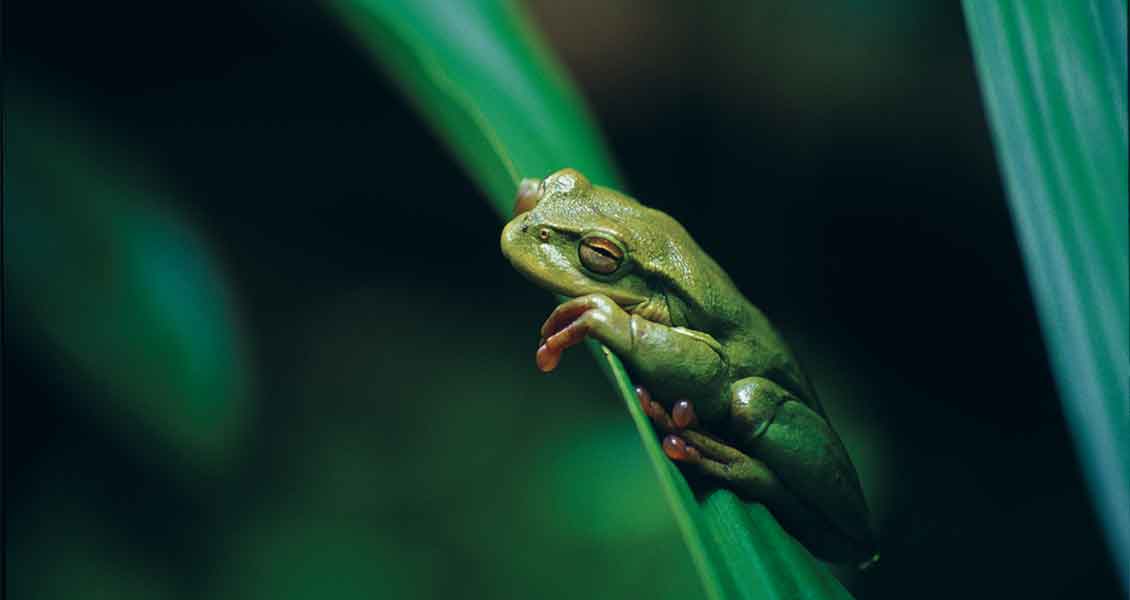
Frogs and toads played an important role in religion given their association with aquatic and terrestrial environments, as well as the hallucinogenic nature of the bufo toad.
Likewise, reptiles had strong symbolism, especially turtles, snakes and crocodiles. Among the birds, the quetzal and the macaw stand out for their plumage, as well as a great variety of waterfowl and chickens, which were an important source of food.
As for mammals, there are no large species, so the tapir is the largest animal. Deer and peccaries were important sources of food, as were some species of large rodents, such as the tepezcuntle.
Of great importance has been the Jaguar, a symbol of strength and supernatural power, as well as the puma and other smaller cats. The Spider Monkey and the Howler Monkey are the only two species of monkeys, and they also figure as important players in mythological narratives.
All this variety of plants and animals can be appreciated in the different natural reserves found in each region, many of which are also archaeological parks.
It should be noted that for the Mayans the natural environment has always been important, which is why communities and archaeological sites surrounded by nature are the most attractive complements to their cultural wealth.
In addition, the conservation of local natural resources allows you to enjoy the traditional gastronomy of each region, since many ingredients are only found as part of the ecosystems close to each community.




 EN
EN  ES
ES 