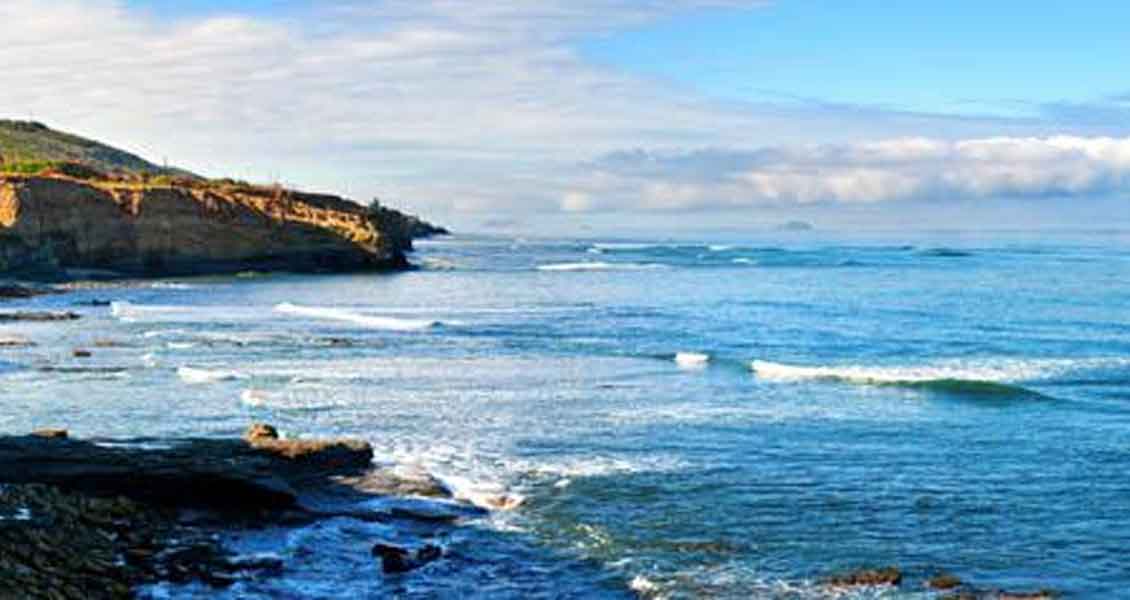
The Pacific Coast It is very similar to the Lowlands in some geographical aspects, since it is characterized by altitudes less than 300 m above sea level and was originally covered by tropical forest.
Therefore, its original flora and fauna has been very similar to that of Petén, with the exception of species typical of the Pacific Ocean. The coastal plain extends for 700 km from northwest to southeast, starting at the isthmus of Tehuantepec, until reaching the western coast of El Salvador, where it becomes very narrow, due to the presence of the Sierra del Bálsamo.
The northern limit of the Pacific Coast is delimited by the presence of a chain of more than 40 volcanoes, whose activity has contributed to the high fertility of its alluvial soils.
The southern slope of the volcanic chain is known as Bocacosta or Piedemonte, which reaches 1,000 m above sea level and is characterized by high rainfall, which exceeds 2,000 ml annually.
For this reason, the main cocoa production areas were located in the areas of Soconusco, Suchitepéquez and Izalco. In this region, the presence of rivers was also important, which served as territorial borders. Of its natural resources, the presence of mangroves is also relevant, which facilitated the settlement of the oldest populations in the entire Mayan Area.



 EN
EN  ES
ES 